

Turmeric is such a tropical and lush plant with large erect leaves, with its own very distinct and noticeable fragrance and it’s bitter, mildly pungent taste is always a reminder for me of ginger.
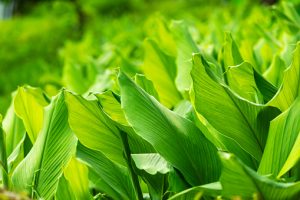
Turmeric Farm,Turmeric is a flowering plant, Curcuma longa of the ginger family, Pokhara Nepal
The dried rhizome is the part used, and the most commonly known active constituent of Turmeric is Curcumin, however Curcumin does not act alone as Turmeric actually has many, many more, and it is believed that these all work harmoniously together.
Indigenous to the tropical regions of Southern Asia, it is widely used as a yellow food colour & spice (both fresh & dried powder forms) that gives curries its characteristic yellow colour, it is also used to colour mustards & robes for Hindu priests. Turmeric is used in Hindu religious ceremonies & Hindu’s apply a mixture of Turmeric & Sandalwood powder on their foreheads.
In Chinese medicine, Turmeric is used in the treatment of inflammatory & digestive disorders, and in Ayurvedic medicine it is used to treat a wide variety of disorders including Rheumatism, skin conditions, inflammation, intestinal worms, liver disorders, many digestive issues, diarrhoea, constipation & colic. It is also used in cardiovascular heart disease, reasearch (1000’s of them!) focuses a lot on Turmerics anti-oxidant, anti-inflammatory, anti-microbial, liver protection, cancer protection & even its ability to promote the flow of Qi (pronounced “chee”).
However, as with herbal medicines, we discover that our herbal medicines can do so much more & Turmeric proves this! Curcumin, one active ingredient of Turmeric has several properties that suggest an anti-depressant action in many clinical trials, with significant anti-anxiety effects also proven, Curcumin has been shown to be of benefit around week 4-8 of treatment, but recent studies now reveal so much more, as we now know that so many various pathways in our bodies are directly linked to depression! In particular, its really interesting the relationship between our gut-brain barrier & by simply treating our gut health & reducing inflammation we strengthen our intestinal wall which then reduces bacterial toxins & their ability to pass from the gut into the blood stream! Within the Hypothalamus/Pituitary/Adrenal Axis (HPA) pathways in our brain is particularly important for our stress response, and with our cortisol levels, and abnormalities here have long been noted in depression! Depression is also associated with an increased size & activity of the pituitary & adrenal glands. Again, Curcumin has been shown to alleviate depressive symptoms as well as other mind alterations induced by cortisol, plus it can normalise the adrenal glands size. Some people are reluctant to take pharmaceutical medications in fear of negative adverse effects, or that long term use of anti-depressants are showing no real relief, and this is where alternative medicine appears to be a seductive option!
But be aware, large amounts of Turmeric can cause stomach upsets and to dose therapeutically, I always advise to consult a qualified Naturopath or Herbalist, as well its important to note that components of Turmeric root can potentially negatively interact with other medications & herbs. Did you know that many over-the-counter supplements don’t contain the full spectrum of Turmeric extract, and really have no medical significance because they are not at the correct levels for us?
Turmeric, like so many other herbal medicines is a really remarkable ancient spice that is used from your kitchens to my clinic!
Your’s in health,
Sharon
As always, references are available upon request
Recent Comments