

Through-out the years of modern medicine, chemical & synthetic medications have been developed, unfortunately – as we know, many of them have detrimental effects on us, which has diverted many researchers to focus on seeking new alternatives. Modern science is now devoting studies into medicinal plants & natural compounds that may have positive effects on various conditions.
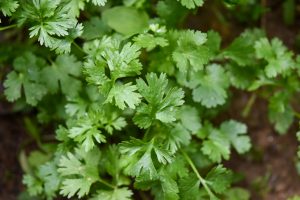
Medicinal plants have traditionally been used as alternative remedies, and now are playing a major role in new pharmaceutical drug production with a safe & effective profile. They are gaining high attention lately with increased studies & research confirming their therapeutic properties.
Among the medicinal plants with “hot” current interest is Coriander (Coriandrum sativum). Coriander is one of those herbs that we either love or loath, & I AM a great lover of this herb, which is why I want to share with you what we “know” about Coriander.
Coriander is very common, it has enormous documented traditional medicinal uses as a treatment for diabetes, gastro-intestinal disorders, kidney & heart problems, & also for fighting worms, rheumatism & joint pain.
Coriander is a small annual plant native to the Mediterranean countries, its leaves are used for their distinctive flavour in salads & cooking. Medicinally, the seeds are the most important part of the plant. Using the seeds as an infusion (or tea) taken after meals can strengthen digestion & relieve flatulence, up to three infusions a day is recommended. Coriander seeds are rich in volatile oils, which are vital for various inter-actions with other organisms & surrounding environment within our bodies.
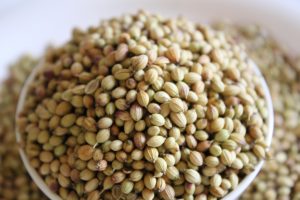
Coriander leaves & stems are rich in nutrients & contain Vitamin C, carotene’s (powerful anti-oxidants), & Vitamins B1 & B2, and can be used to increase our appetites, this is the part that comforts our stomach & improves our digestion.
Let’s explore the “loathers” of Coriander a little more, did you know that it is all relative to our sense of smell? Around 4 to 14% think that Coriander tastes like bath soap! As most loathers have a common smell gene called OR6A2!! To avoid the soapy taste, the Coriander “loathers” can often replace Coriander with Parsley instead. The lovers usually perceive a tart, lemon or lime-like flavour in contrast, simply due to our sense of smell!
So, whether your a lover or loather, let me give you the enormous list of pharmacological activities of this herb, it is anti-microbial, anti-oxidant, anti-diabetic, anxiolytic, anti-epileptic, anti-depressant (I’m taking a deep breath!), anti-mutagenic, anti-inflammatory, anti-dyslipidemic, anti-hypertensive, it is also neuro-protective & a diuretic! Plus, Coriander also possesses lead-detoxifying action!
It really is an incredibly amazing herb!
x Sharon
As always, references are available upon request
Recent Comments