
In our family, our recycling bin (the yellow lidded one) is the fullest, and this is something we all thought we should be proud of, well at least we thought so!!!
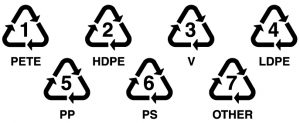
Those triangles with numbers & sometimes letters that we thought meant recyclable, guess what!!
THEY DO NOT MEAN THAT THEY CAN ACTUALLY BE RECYCLED!! Which is sooooo confusing, those symbols are on most plastic bottles, jars, containers & loads of other packaging too! So, I started looking into this more, and you may be surprised just what I found out…
So, it turns out that those symbols are actually what the plastic is made off, nothing to do with recycling! It is actually called ‘The Plastics Identification Code’, launched in the US in 1988, then in Australia in 1990, by the Plastics Industry. Each number actually identifies the RESIN composition of the plastic that we are potentially ingesting!!
We already know that plastics are EVERYWHERE! and in my opinion should be avoided at all times, however a lot of our products are only made from plastics, so what does each number actually tell us & can it be recycled & is it safe for us as a food carrier?
So, here’s the numbers:
- PETE, PET, or Poly-ethyene Tere-phthalate – This is the easiest plastic to recycle, it is a clear, solvent resisting, and tough plastic. It is used for water, soft drinks & detergent bottles, and the like. It is often consider ‘safe’, however it may LEACH plasticisers & other chemicals into us, it is also considered ‘single-use only’ (something that I detest!). It is commonly made into ‘polyester fibres’, bottles & jars.
- HDPE or High Density Polyethylene – This one is both soft & also rigid, it is a very common plastic. The rigid form is often used for milk bottles, shampoo bottles & cleaning products, again, considered ‘safe’, however it may LEACH plasticisers & other chemicals into us! The soft form is found in our freezer bags, plastic bags generally, plus other food packaging (which we recycle at our REDcycle bins at the supermarket), the hard type can also be recycled & turned into even more plastic bottles or bags (not ideal really).
- PVC or Poly-vinyl Chloride – This stuff is everywhere! It’s in our condiment bottles (sauces etc), cooking oil, clear food packaging, it’s also in our babies teething rings, toys. It is difficult to recycle & it contains harmful chemicals too, it may even release toxic breakdown’s of phthalates into our food & drinks!
- LDPE or Low Density Poly-ethylene – This one is usually a soft plastic, and flexible, it is used for different kinds of wrapping, such as our bread bags, produce bags & our bin bags, luckily it can be recycled at the REDcycle bins in our supermarkets, although the hard, rigid form of LDPE is not recyclable, so more left in landfills!!
- PP or Poly-propylene – this is the hard plastic used for ice-cream containers & lids, and take away containers too, most councils will take this for recycling, but I think its best to ask your local council.
- PS or Poly-styrene – yep, this stuff is a real problem! The common name of it is Styrofoam, we’ve slowly seen it disappear here in Queensland, but its still common in foam food trays, cups & some packing materials, but also meat trays, egg cartons & take-away containers. Did you know that when heated, Styrofoam actually releases potentially toxic or carcinogenic styrene into our coffee or tea, plus it is notoriously difficult to recycle!! JUST DONT TOUCH IT, IT SHOULD BE BANNED ON THE WHOLE PLANET!!
- OTHER – this is the group that is labelled ‘other’ because we don’t know what mixture of plastics it contains! It is usually not recycled because no one knows what it is! Some may be safe? Some should, at least, be considered suspicious! We find this category in our babies formula bottles, one-use water bottles, sunglasses, phone & computer cases, it is also used in certain food containers!!
Well, that has certainly changed my views even harsher on plastics! It is vital that we recognise the bad-guys (actually I think they all are), we do know that they are a common source of very well-known toxic chemicals like BPA, phthalates & di-ethyl-stil-bestrol, plus there are many more. We also know that these chemicals ‘leach’ from the plastics, especially with heating & in my opinion should be totally avoided. However, if you must purchase a plastic, make it numbers 2, 4 or 5, as these have no real known health hazard (that we are yet to discover), except if you ingest them that is! The guy’s to absolutely avoid are 1, 3, 6 & 7, but you know what? Try to stop using them altogether!!
Recent Comments