

Whilst everyone in health & well-being are talking about the Mediterranean Diet, some of us get confused by thinking this must mean pizza’s, or pasta noodles with meat sauces! So, hopefully I will help to clear this a little more for you by showing that the Mediterranean Diet is not only an immense wealth of foods & recipes (keep an eye out for my delicious recipes-to come soon!), but also an important part is human contact! Plus, it won’t leave you feeling hungry, and it still keeps you healthy & thin!!
The traditional Mediterranean Diet is within the deep heritage of all countries around the Mediterranean basin, and offers a cuisine rich in colours, aromas & memories, which support the taste & spirit of those who live in harmony with nature. This dietary pattern is rich in plant foods (fruits, vegetables, legumes, non-refined cereals, tree nuts, seeds & olives), with olive oil as the principle source of added fat, it also has moderate amounts of eggs, poultry & dairy (cheeses & yoghurts), it has low amounts of red meats & alcohol (mainly wines during meals).
For those science-based out there, we have many studies that have established the health benefits of the Mediterranean Diet, mainly in relation to reducing the risk of developing metabolic syndrome, type 2 diabetes, heart disease & some neuro-degenerative diseases like Alzheimer’s & also cancers. This healthy Mediterranean Diet was really popularised since the 1990’s by the world famous food pyramid that we all learned about in primary school, it highlights the food groups that we should be having daily, weekly or less frequently.
The Mediterranean Diet appears as the best diet pattern which is a great reflection of the ideal healthy diet, & is considered as one of the main dietary patterns able to give beneficial effects on longevity & health. But, the Mediterranean Diet also includes lifestyle factors such as regular physical activity, adequate rest, conviviality (being friendly & lively), biodiverse & seasonal foods, traditional, local & eco-friendly products (no one-use plastics here thank you!) & culinary activities (cooking & eating together) are all integral of the Mediterranean patterns pyramid. Foods in the Mediterranean diet are extremely beneficial due to the high amounts of anti-oxidants & anti-inflammatory nutrients found in many Mediterranean foods (legumes, fresh fruit, nuts, vegetables, fish & olive oil (especially extra-virgin olive oils) which have protective effects in our bodies for fighting diseases.
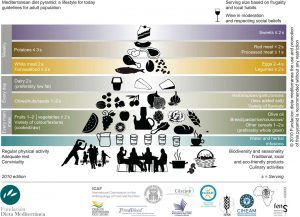
I just want to focus on the olive oil aspect of this food pattern for a moment, olive oil is a key element in the Mediterranean diet as it helps prevent Cardio-vascular diseases, the healthy poly-phenols found in olive oil are indeed powerful anti-oxidants with anti-inflammatory & anti-thrombotic, and some mono-unsaturated fatty acids found in olive oil are protective for Cardio-vascular diseases, this is why olive oil is commonly known as “the sweeper of our arteries”.
Not only does the olive oil contain these healthy poly-phenols but so do the other core ingredients, the nutrients are so rich, which means they are able to reduce deadly-diseased cells & to protect cells from diseased cell growth & spread. Besides this, the fruits & vegetables have high amounts of carotenoids (powerful anti-oxidants which provide protection from the damaging effects of free-radicals, along with all the vitamins, folates & flavonoids (plant power-houses), nutrients well known for the anti-oxidant properties which allow prevention of DNA damages. Finally, the omega-3’s found abundantly in fish, especially my favourite-sardines & also mackerel (typically used in the Mediterranean diet), & in nuts (almonds, walnuts, & pumpkin seeds).
As a Naturopath, I counsel my patients on the real Mediterranean diet, our diet is one of the most important aspects to be monitored at all stages of life as it is a key part of the prevention of many diseases, the success of the Mediterranean diet is its composition – a varied diet characterised by a high consumption of vegetables, fruits, grains, legumes, fish, eggs, olive oil, along with a few servings of meat per month. A diet rich in tradition & an active lifestyle is the model that we all should follow.
As always, references are available upon request
Recent Comments